
Hey Bully, I Look Forward to Seeing You at The 15 Year Reunion

In honor of National Bullying Prevention Month, I thought I would write an entry about this epidemic. Honestly, I have no idea where to begin. There are so many roles in bullying, and so little that can truly be done about it. All we can do as parents, adults and teachers is to try to instill empathy into our children. This is the tough part. From my own personal observations, I feel like empathy is lost by nature between the years 3 and 18. Before 3, it is natural, after 18 it is recognizable as a response to situations we have been involved in or witnessed.

I absolutely LOVE the natural, unforced, unscripted empathy I see in 2 years olds. Has anyone else noticed that? There is this little pocket of time between when a child learns to talk to when they learn to be sassy where they show extreme empathy. My daughter, Lilah, is there right now. She is absolutely instinctual with her empathy.

It is inevitable that I run into the corner of my bed at least one time a week, at least. Each time, I hit my thigh in the EXACT same spot and each time hurts just as badly as the time before, sometimes worse depending on the time between the last collision and the current one. Three days ago, just as my previous thigh bruise had dissolved, “boom!” I nailed it again, this time HARD! I immediate fell to the ground in what was for sure an over exaggerated response in order to get out of the nightly bathing of the kids duty, but still, it did hurt.

“OWWWWWWW” I screamed just loud enough for Blake to hear me, but no so loud that it seemed fake.

Blake yelled from downstairs “What happened? I’ll be right up after I kill this boss.” (whatever that means in video game language).

“OWW OWW OWWWW!” I yelled louder in order to make sure he knew I wasn’t going to bathe the kids.

Immediately I hear someone coming up the steps. In my head I thought, “yes, he is coming to the rescue. Run the water!” It wasn’t long before I noticed that the sound I heard coming up the stairs wasn’t 195 pound steps coming up 5 steps at lightning speed, instead it was a step-thump-step-thump-step-thump sound approximately 14 times until I see the sweetest little 25 pounder rushing into my arms asking “mama, ok? mama, ok? hurt you? hurt you? awe awe mama awe.” She did not laugh, she teared up with me, poured her body on mine and wrapped her arms around me in genuine and sincere love and compassion. Now if we could just spread that around the world, we would all be just fine.

Don’t worry, it doesn’t take long for that shining characteristic to become few and far between. I am not saying that children are not prone to natural empathy. In fact, I think people who are empathetic are naturally that way. I think those who are not can learn strategies to be, but that natural instinct can’t be taught.

In my years in the classroom, I found myself drawn to my students with empathy. Sure, I taught the Behavior Intervention Program so it’s safe to say empathy wasn’t pouring out of my classroom, but it was there. I can promise you that. So much of the behavior I worked with was defensive. My kids were 1/2 and 1/2. They didn’t often play the role of the observer (I’ll get into this role later). My kids were either The Bully or The Bullied.

I truly believe That Bullies act out of defense. Often times, they target the children who have similar weaknesses or differences as them because it deflects the negative light from them. For example, let’s say The Bully is a little larger than average, but not fat. They can target someone even bigger than them which gives all of his followers a false sense of average thus taking the light off of his own weaknesses and selfishly using someone even more fragile than himself as his pawn to feel acceptance. This is one of many reasons kids bully. Other reasons include the need to be a leader in a world where they may not quite fit, lack of structure and foundation at home, *(some of the most empathetic children I have ever taught have come from the most broken and unstructured homes), or kids that are told by another bully to bully.

As for The Bullied, these are the kids who are unique, over achievers, quiet, short, fat, scarred, etc. These are the kids who, if they make it through their adolescent and teen years, go onto become our bosses, our presidents, our leaders and humanitarians. They are the kids who have unbreakable confidence to face the most difficult challenges in business, make the biggest sales, and lead worldwide initiatives. These children experience more adversity, silence and fear in their youthful years than human should have to experience, but they go on to move mountains. Parents of The Bullied, hold on tight, love and protect your children, build them up, love them unconditionally because one day, not too far from now, they WILL be ok. They will be better than OK.

Then there is The Observer. Hand’s down one of the trickiest roles to play. In essence, they can do the right thing, and make an adult aware of the situation thus becoming the snitch and the next victim for The Bully or they can remain silent, lose sleep at night over what they saw and didn’t tell, but then be on Team Bully, a team which they have no desire to be on, but are almost forced upon (I know this is a run-on sentence but I didn’t breath when I wrote it, so I felt like it was an excusable grammatical error). I feel for The Observer. People say they are just as much at fault as The Bully, I wholeheartedly disagree. They are a lose-lose position. The way they process it, handle it and the actions they take or do not take will be pivotal in their personal character building.

All in all, Bullying is an epidemic. As teachers, friends, parents and loved ones, there is so little we can do. Because unlike the defiant behavior I typically post about, this behavior is sneaky, not often seen, masked with fear from the victim, not heard or not acted upon because of so many “crying wolves” and overuse of the term. I think the main thing we can do is teach our children as best as we can to be good human beings.

I’ll never forget when I was made aware of being empathetic. Blake and I were headed out to one of our first dates. It was winter of 2006. We got out of the car and started walking hand-in-hand to the movie theater on a Friday night. Just behind us was a sweet little man who was all alone. His head was down, and he looked lonely. I started to cry, I wanted him to go with us. I panicked because I knew Blake was in town to take ME out, not me and the sweet, little stranger. I couldn’t resist asking him to join us, a move that showed him acceptance and compassion. A move that showed Blake who I was before he committed his life to me. A move that hopefully made a difference. Do one thing every day for someone else.

Ultimately, the world will have to naturally become more empathetic before we see major changes. I do think that each one of us can make a difference. We have to listen to our children. For the younger ones, we have to dissect their stories and self-identify what may be bullying. Often kids between the ages of 4-9 have no idea that someone is being bullied or that they are bullying others. If you get a call that you child has been bullying, don’t jump to the defense, rather accept it with appreciation, and teach right from wrong in a world where that area can be so grey.

Advocate for you children and other’s children. Keep the awareness going. Let’s continue to collaborate to extinguish this horrible behavior that has grown exponentially over time.

I am glad to see popular tween artists doing songs like the one below. Thank you Matty B! This is one step in the right direction!

Homework is Perfect for the Perfectly Average

This year I took on a new job where I see a totally different perspective of special education. It’s not a bad side or a good side, just a different side. The change has been quite trying, and there are days that I truly don’t want to go to work. Good Grief I have become more honest in my older age. Don’t get me wrong, I have amazing days as well.

That being said, one of the biggest highlights in my new job is the intellectual conversations I get to have with my coworkers. The other day, we were collaborating, and one of them said something that I have been reflecting upon ever since. She said that homework is nonsense. As a group we discussed how cool it would be to have a school or even a school district who piloted a No Homework policy for just one year.

Something I learned right out of the gate in this new position is to hold my tongue until I have given my brain adequate time to reflect, see all sides, internally dialogue and filter my thoughts. There is very little casual conversation in this role and oftentimes, my casual brainstorming can be used a factual guidance. Of course, my casual thoughts are tweaked a bit to be more fitting to the listened ultimate goal. OK that was a random tangent back to the topic. The whole point was I stayed quiet on this statement/idea until I had time to reflect on it and think about where I truly stood on the subject.

After that conversation took place, I reflected on what a school with no homework would look like. Would their scores tank? Would kids fall behind? Would they have time to learn everything they are expected to learn? Would our kids be prepared for college?

In the special education world, we are dealing with overwhelming and rapidly increasing levels of anxiety, OCD, behavior disorders, defiance, refusal, stress-based gastrointestinal issues, etc. When I think of the root of most of these problems, it starts at home. Trust me, this has nothing to do with parenting. Heck, I am a mother of a 5-year-old with unnatural anxiety and fear of separation, so no it’s not parents. The root of most of these anxiety-based issues is the incredible demands that we as a nation are putting on our children.

When I think back to my childhood, I had homework, but I don’t remember a time where I thought I was overwhelmed with it or couldn’t find time to play because I had 3 hours of work to do. The demands on children which ultimately lie on the back of parents and guardians are simply too high. There are a handful of kids who love homework and do it without a fight from their parents. It is natural and something that they intrinsically choose to do. With or without a homework policy, these students will still use their leisure time to learn more, study more and continue to strengthen their personal knowledge.

I would love to see a school adopt a No Homework Policy for one year while heavily encouraging the use of this valuable time to be time for dinner as a family, cooking together, going for walks, playing outside, watching a movie together or any other stress-reliving activity. This would promote both positive parents/children relationships and good health. My guess is that test scores would still remain the same, but the well-being of the children will be much more stable.

I am not sure what homework looks like at your house, but in all of the meetings I have sat it, it has been a major source of anxiety and disconnect in both students and parents. Just the simple step of lugging home 5 binders full of notes and then filtering through what the homework expectation is is enough to start the family time off to a stress-filled start. “Welcome home, get to work.” After 8 hours of learning, rule following and structure, parents and students both need time to simply decompress. I guarantee that the 3 extra hours of route learning, parent-enforced, drill and rep assignments are not moving us as a country to the highest level of academia, rather it is increasing depression, anxiety and disconnect with our students and children. How nice would it be to come home and know that family time will be exactly that- quality time spent together.

I know this will be a controversial blog entry, and I am prepared for that, but understand, it is simply my opinion and it’s worth exactly what you paid for it. 🙂

‘Tis the Senses

‘Tis the Senses

“Ring, Ring, Ring…Meeeeeerry Christmas!” says the Red Cross, bell-ringing, money-collecting volunteer in his red vest and Santa hat. I really do loves those guys, and I love the cause, but that little sound triggers two parts of my brain. The first side of my brain is happy and excited about his oh-so-premature presence as it gets me in the spirit of Christmas and Thanksgiving. The other side of my brain cringes in anticipation of the behaviors that will start to surface with this time of year.

It’s taken me quite awhile to put my finger on why my kids with Behavior Disorders and Autism seem so “off” in October, November and December. After collecting years of data on behavior and antecedents for particular behaviors, I think a lot of it comes from the lack of structure combined with the sensory overload that accompany the holidays.

LACK OF STRUCTURE: When structure is initially implemented, these kids resist it, and there will likely be a heightened frequency and intensity of behavior. Implementing structure is a transition for kids. Often times, as a teacher, you consider transition the times between classes, lunch and grade levels. Transition doesn’t stop there. Transition is constant in the minds of children with Autism and Behavior Disorders.

Think about this, Little Timmy, flaming in all his EBD glory, has been in school since August. It’s mid September now, and he is starting to get into his routine at school. He has a place to sit in the overly-stimulating cafeteria. He sits with two other boys, and they talk about Legos and the cute girl who doesn’t know they exist. He has finally mastered opening his locker without having to ask for help from a teacher which for eight weeks has opened the door for ridicule from his peers with superior adaptive skills. He made his first C on a test after ripping up the first three which were hand delivered to him with a bright red F on the front page. This test is on the fridge at home next to his gifted brother’s stack of A+ tests which require magnetic reinforcement to hold them all in place. Timmy’s parents notice that he is waking up on his own and genuinely looking forward to getting on the bus to come to his structure-based classroom. Timmy is making progress.

Six weeks pass, and now he is really rocking. In some situations, he is even a leader. He simply knows what to expect, and he is covered in positive reinforcement. Now here comes Halloween. Everyone is buzzing about what they plan to be and what their favorite candy is. They discuss the plans for the typical teenage pranks and decide what neighborhood to meet in. Its’ then that it hits Timmy; Timmy’s life and friends are solely based inside the walls of the school. His friends don’t bleed into his home life. Timmy missed his friends at school because those are the ones with which he found commonalities.

Timmy gets sad inside and he starts to withdraw from the successes he has been riding on for the last two months. Timmy is sad, but again he doesn’t know why and doesn’t know how to tell anyone that he is sad. He Speaks Behavior. Timmy toughs through and is anxious to get back after the hype of Halloween simmers down.

Two weeks pass, and Timmy is back in his rhythm. Yes, one day (Hype-o-Ween) takes two weeks to reestablish that routine for most kids. Halloween is behind him, and he is rocking and rolling his way along. And then it hits him, he has two more weeks until it’s Thanksgiving, another long break. This break is not structured. Here comes the behavior again. He is trying to hold it together as he knows he needs to embrace the last two weeks he has, but he simply doesn’t know how to balance the anxiety/excitement of the break and the happiness he unknowingly finds in his routine at school. Hello Behavior, how I have missed you!

SOLUTION: Provide Timmy with what to expect for these breaks. He needs to know that there will be structure. I encourage the parents of these kiddos to ask the teacher for what they can implement at home that will help him have structure. Create a schedule for Timmy. Make it visual and realistic. Schedule relaxation time. Schedule video game time, but allow him to earn more than the schedule allows. Explain this to him. Timmy needs structure. He needs to know what is happening next and next and next and next.

SENSORY OVERLOAD: If I listed the sensory triggers than accompany Halloween, Thanksgiving and Christmas, I would have an endless blog entry. When I walk into Starbucks in October, I absolutely love the smell of a Pumpkin Latte. November rolls around and you walk through the wall of Cinnamon Broom smells at every grocery store. December hits and you have to walk past the ear-piercing ring of the Red Cross man to get into the store that is blasting Christmas tunes with squeaky chipmunks and catchy choruses. Within the store there are blinky lights, bright lights, blue lights and white lights. There are moving Santas and inflatable reindeer marching across the lawn section at the Home Depot. Everything around you is moving and bright and smelly. You don’t have sensory issues, so you take it all in and experience the love and warmth that comes with the holiday season.

Then there is Timmy. All of the above sensory stimuli just about push Timmy off the edge. For Timmy, a family gathering full of stories, laughter and clicking of silverware on China plates may sound like a freight train in his head. For Timmy, the mall is just way too much. For Timmy, blinky lights are the enemy and he just wants them to turn off. Timmy wants to be in his comfortable 74 degree classroom, with the lights out and the ambient light shining through his wall of windows. His classroom is quite and all he hears is the sound of the heat coming through the vents. The room smells like concrete and textbooks. Timmy likes it here.

SOLUTION: Allow Timmy to wear his headphones to the mall if he MUST go. Let Timmy pick out the Christmas decorations and be sure to ask him which Christmas lights make him feel the most comfortable (be prepared to have a blue Christmas). Allow him to help decide where the tree will go and how many ornaments would look good on the tree (be prepared if he isn’t interested in ornaments at all- it’s ok) . Before buying a huge animated inflatable for the front yard, ask Timmy if he likes those or if they just plain creep him out. You just may end up with an extra $100 in your pocket for the Red Cross Ringer.

In summary, be aware of these sweet children and their needs. Do not assume that Christmas tree scent, blinky icicle lights and hectic trips to the mall are in the best interest of them. Be patient with them as they attempt to adapt to the lack of their structure. Help them feel safe. At some point, as parents and teachers, we have to be ok with letting go of our traditions and begin creating a comfortable tradition for our special ones.

‘Tis The Season!

Redefining Normal

Redefining Normal

No one wants to hear the words “your child has autism, your child has ADHD, your child is depressed…” But the first step into finding the beauty in our overly-adjective-d children is mourning the loss of our expectation of “normal” and redefining normal for our child.

As parents, this is one of the hardest, if not the hardest, step of the whole process. This is true for several reasons. First off, it is new to us. To do anything well takes time and practice, and I think parents of children with disabilities get better and better at that job as time passes. Secondly, we all have dreams of what our children will do with the foundational skills we teach them. When we are pregnant or going through the steps of adoption, we close our eyes and envision our children’s perfect little lives. When we hear that their perfect may not match our visions of perfection for them, we have to mourn that dream. We physically, emotionally and spiritually do mourn this, and until we do, it won’t get better.

Of course, I have not experienced this first hand, but I have been through the process with many of student’s parents. I know what you are thinking, “how has she experienced this when she teaches middle school aged children?” For the most part, my student’s parents know their children have disabilities by the time they come to me, but middle school is also the time where they may plateau in their academics or social growth. The students typically have made some type of progress in school up until this point, and then they hit that ceiling of progression. This is a time where I see parents struggle with abandoning the last remnants of the dream they had for the mainstream version of “normal”. Again, they must mourn, and I try to do all I can to shed positive light on their situation. It is easy for me to see and recognize all of the beauty and positive attribute these children exude. THEY ARE BEAUTIFUL.

So when you hear “your child has Autism”. It is normal to be angry, cry, feel guilty and question the world, question God, question the doctor and cycle through the emotions over and over again. There is no time limit on how long the grieving process may take and it may manifest itself in a variety of ways. After this, it is time to get rolling on redefining your family’s normal.

How often has someone in your life referenced “The All American Family?” Gag me!! What does that even mean? Does that mean that it’s a family with less than a 50% chance of staying married according to the US divorce rate? Or could it be 8.8 years of happily married bliss which is the US marriage length rate? Would the “All American Family” still carry their US average of $15,159 in credit card debt? Do we just throw in 2.5 children (one of which is likely to have some sort of disability), a Golden Retriever, a nice flat front yard and wrap a white picket fence around them and they become this normal “All American Family?” I don’t think so.

So today is the day to start planning and defining YOUR family’s normal. Learn what makes your child tick. Learn what makes him happy. Think back to when you were dreaming your dreams about your child. Did you dream for them to be happy? I am sure you did. Their happy may look different than ours. Embrace their happy. Embrace their normal.

It is ok that your child doesn’t want to play football, but he would rather circle around the fence looking for “treasures”. It’s ok that your daughter would rather sit under the bean bag than on top of it. It is ok that tag on your son’s shirt makes him go off the deep-end. Cut off his tags. It’s ok if you drive by your child’s school playground and your daughter is sitting alone on the black top tracing invisible animals with her index finger instead of playing ‘Red Rover Red Rover’. They have created their normal. Live in their normal with them when you can. Expose them to your normal, while trying to play the role of the parent or teacher they see in their perfect little world.

Until next time my friends…

Just Behave and Be Good

How often have you told your child or student to “behave”? How about “be good”? Have you ever asked them, “Why can’t you just behave?” I know I have.

It is such an easy question to ask and the simple command of “behave” is even easier. After all, that covers all of our bases right? I mean it, I said, “behave” you know, “be good.”

Again, I find myself so much better at avoiding this as a teacher than as a parent. I know all my parent readers are tired of hearing me say that. Sorry, it’s true. I am constantly working on my carry over from the teacher to the mother role, but it is definitely still a noted weakness.

So, some of you may be thinking, “what’s wrong with telling our children to behave?” Let’s do a little exercise. Without over thinking it, tell yourself what it means to behave; say it out loud if that is easier. Now, ask the closest adult you to also define what it means to behave. Now, ask one more adult. Do your answers match? I am sure they are similar and run along the lines of following directions, complying with adults, doing what we know is right…Sound about right? Now, I want you to find your child. Ask them what it means to behave. See what they say. Close? Was their answer similar? Did it seem hard for them to answer? Did their answer seem scripted?

I think in most cases, the answers would be yes. Children need specific information when we are trying to form behavior. They do not need grey area. Keep it direct, simple, and black and white.

Behave= Lottie today when you go to school, I want you to focus on listening to your teacher and when she asks you a question, I want you to look at her eyes before you answer.

Behave= Lottie today I want you to use ‘sir’ and ‘maam’ each time you talk to an adult.

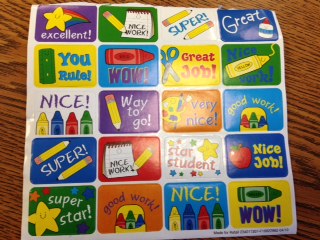
This rule also applies to reinforcing good behavior to our children. Compliments need to go farther than just “good job”. When I go to the School Box store and I see all of the stickers, I always dream of inventing one that leaves room to specify exactly what was “Well Done” or what “A+” means.

In short, we must be specific when we talk to our children. We need to give them well described directions. On the other side, we need to specifically reinforce their good efforts, even the small ones.

Good Job= Lottie I love how you stopped running when you saw your little sister today because you know you could have run into her and hurt her. Thank you.

Well Done= Lottie it is so great that you put your plate in the sink without me asking you do. That is a really good decision.

Using more detail in directions and compliments seems easy enough, but something else that we forget it to specifically praise children when they comply a little bit. I know how hard this is when dealing with extreme behaviors. As adults, we are so frustrated and obsessed with what they are doing wrong, we forget to dig and see what they are doing right. For example, when I have a student melting down, they may be telling me to “F-off”, and they may be throwing desks and supplies all around the room. Do they have my blood boiling? You bet they do. It takes all I have to positively reinforce the little things at this point, but this is the point where they need it the most.

Rewarding the Little Things= Timmy is in a full meltdown, cussing and turning the entire room over. Timmy picks up a chair over his head and acts as though he may throw it. Instead of throwing it, he puts it down (loudly of course). “Timmy, thank you so much for putting down the chair. That was a great decision. I am proud of you.”

image

Save Your Vocal Cords


Dear Yelling,

I know you far too well. I despise you. You are a direct sign of my impatience and you teach my children nothing. You scare my children.

Love,
Meredith as a Mom

Dear Yelling,

Who are you? I think I have used you twice in seven years and both times you pulled me farther and farther away from my goal of changing behavior in students. You don’t work. You do nothing for me, so I am glad I do not know you well.

Love,
Meredith as a Teacher

It is so interesting and frustrating to me how I use yelling in my day to day life. I NEVER yell at my students. First off, it does no good. If anything, I temporarily scare my students into behaving. I am not teaching them how to behave rather I am setting a terrible example for them. Thus, I don’t use yelling as a strategy with my students.

Often times, the children I work with are very black and white. The whole “grey area” concept is non-existent in their eyes. Therefore, I teach them by being their example. I role play with them as a way for them to see and feel what appropriate is. So if they see me yell, why would they not mimic me in their heated situations? The students don’t understand why I am allowed to yell, and they are not. For this, and many other reasons, I do not yell at my students.

Now I need to teach myself to practice what I preach and not yell at my own children. I am aware that yelling at them does nothing for them or me. I am not teaching them how to behave or how to be a well-rounded child; rather I am painting them a picture of a stressed-out and impatient mother. I have learned that it is a release for me when I am completely maxed out, and I used it as a personal intervention. Bad, bad, bad mommy.

As both a teacher and a parent, I aim to avoid a power struggle at all costs. Children with behavior disorders thrive on that struggle. They will do anything possible to “win”. I am ok with them winning. In fact, I often tell them they have won. This may seem weird, but once they have won, they have won. There is nothing else to fight for.This is the point when we can begin teaching and be done with the battle.

My new goal after honestly writing this entry is to not yell at my children. I know I will fumble, but I am going to make a conscious effort to eliminate this unnecessary and unproductive form of discipline. If anyone out there has replacement behavior options for me, please do share. I need to learn how to transfer my patience as a teacher into my parenting.

They Don’t Care What You Had for Dinner

Building relationships with children is the easiest way to change behavior. Of course, this task is much easier said than done. The root of the word “relationship” is “relate”. This is where things get sticky. It is impossible to relate to a child with behavioral disorders by asking them their favorite food or color or movie. It is much more than knowing that they like soccer, had pizza for dinner and don’t like their little sister. It’s about truly getting to know them as a child. One must put their behavior and words behind them and focus on the whole child.

Building a relationship and relating with children who are so different than you is not easy. As adults, we enjoy cooking, reading magazines and silence. Kids much prefer a Happy Meal to a Filet Mignon. They think magazines are solely for creating collages in Language Arts class, and they are uncomfortable with silence.

So, how do we relate to these kids? The answer is ever changing. Trust me; I am not expert at this, nor am I even close. I know that middle school boys don’t care about my last tennis match or the fact that Blake and I made homemade sushi. They don’t care about my youngest daughter saying “cheese” for the camera for the first time or that my oldest still cries daily when I drop her off to school.

In order to relate to kids, we have to find out what makes them tick. If it is video games, then learn about the ones they like. Bring in magazines or look on the internet with them and engage in this interest. Look into their eyes, and ask them questions. Learn more than just the name of the game. Ask about the characters, the goal, and the strategy they use when they play it. This allows the student to be the teacher, and it also allows them to see that we (as teachers, parents and adults) do not know everything and we NEED them to teach us. Allowing them to be a leader increases their confidence and takes away their need for a future power struggle. It also gives us the ammo we need to distract them when they begin to meltdown.

Right now, the child I am pouring my heart and soul into is an 8th grade boy who was a gypsy on the streets of a third world country for the first 10 years of his life. By gypsy, I mean he truly wandered without parents or any consistent adult or leader. After this, he was put into an orphanage for 2 years before he was adopted by his American parents. (Side note, how awesome are they for taking on this amazing task and saving this boy’s life?)
Each morning, this young man comes into my room. We are divided by the imaginary wall of language as he speaks very little English. When I speak, he reminds me that he doesn’t know what I am saying. Rather than giving up, I use visuals to communicate. I smile at him. I look into his eyes and tell him I am proud of him, while non-verbally opening my eyes wide with affirmation and giving him a thumbs up so he knows that I am pleased with his presence. I will create a bond with this child before he walks out of my school, this I promise you.

I have been working with him for one month now and his behavior has improved greatly. He was struggling with showing respect for authority figures and following classroom rules. Sure, he works on a behavior contract with me which helps, but I truly feel like the main behavior changer for him is to know he can come to me in the afternoon, and I will do all I can to tell him how proud I am of him. I truly love this child and he knows this.

I am finding a way to relate to him without the use of English language. I know what he likes, and I know what he doesn’t like. He knows that he can come to me when the world around him seems surreal. Can you imagine wandering the unpaved streets of your country day in and day out searching for food and fighting your way through life, and then ending up in a very affluent suburban town outside of Atlanta? Imagine having never stepped foot into a school and then walking into a school with flat screen photo displays on the walls, iPads in classrooms, and necklace microphones on teachers for a more clear delivery of the Dichotomous Key, Algebra, or Southeastern Asian Economics lessons. I would imagine that following directions and respecting said microphone accessory-wearing teachers would be a lot to ask.

After talking to his “dad” the other day, I learned that my little gypsy enjoys talking to me more than his outside therapist. When I asked his dad why he said this, his dad told me that my little gypsy thinks I am “real”. BINGO! My heart melted.

So, relate with these kids. Learn who they are. Learn what motivates them. Let them be leaders. Look them in the eyes. Touch them. Let them feel your love. They thrive on love and consistency. Their behavior has become their crutch to obtain your attention, and they can’t differentiate the positive and negative form of attention. Feed them with positive attention and get to know these kids. They are normal children who have been jaded by their impulsivity that they can’t control without you to teach them. Can you RELATE?

Do You Speak Behavior?

Hand’s down one of the most underappreciated and taken for granted skills in life is the ability to effectively communicate with one another. As I put my daughter to bed, I think about the students that I work with that lack the basic skills that she has acquired in the first three years of life.

“Lottie, go put on your pajamas and come read a book with me before bed.”

Lottie looks at me and says, “I am tired mommy, can I go to bed now?”

Simple right? She was tired and she told me. Simple for her, and perhaps you, but trust me, this type of communication and awareness has proven to be an major underlying behavior antecedent. For some children with Emotional and Behavior Disorders the simple identification of their feelings is impossible. They may feel something is wrong, something doesn’t feel quite right inside, but they do not know that that feeling is. Anger or fear or confusion or tiredness?  To them, it is an uneasy feeling inside. To communicate this unknown beast inside, they act out.

With the growing population of children using cell phones to non-verbally communicate, there is a direct decrease with the number of students being able to accurately express their emotions. Having verbal dialogue is in a sense a mirroring activity for them to see, identify and express emotions. “LOL” does mean that the person is laughing, but to not be able to see and hear that emotion will eventually create emotionless children. Don’t get me wrong, I embrace technology and know that it is imperative for the advancement of the human population, but we have to continue to encourage our children to verbally communicate and mirror and label appropriate emotions.

Now it is our goal to help these children identify that feeling and intervene in a way that will comfort them and allow them to express that feeling. When they are sad, they may never cry, but we can teach them to find a safe place and reflect.

Children with emotional behavioral disorders tend to fall into a compartment or a combination of compartments, and for each of these kids, there are interventions and strategies to encourage them to be able to communicate their feelings and emotions in an appropriate manner. It doesn’t matter if they are The Bully, The Passive Aggressor, The Ticking Time Bomb, The Obsessor, The Madman, The Arguer, The Angry Artist, The Nervous Nelly, The Survivor, The Socially Unaware, The Perseverator, The Teacher, or The Kid I Have Yet to Meet; there is a way for them to communicate without exhibiting inappropriate behavior.  After all, you can only shake a champagne bottle for so long before it eventually explodes. Let’s teach our children how to successfully pop the cork and allow the liquid to flow.