
‘Cause we’re livin’ in a virtual world

Video Games… A subject I have avoided for a long, long, long time. I am fairly torn on the subject because my husband, the love of my life, has a passion for video games. This passion turned into a very specific interest which turned into a very sought-after degree which ultimately led him to job security to the point that when he interviews, employers see that he has a degree in Video Game Design from Full Sail University, and they insist on immediate interviews. So one side of me loves video games, but the teacher in me wishes that video games were still limited to the likes of Tetris and Zelda.

As a parent, I see the value in video games. They keep the child’s interest and give me a few minutes to tidy the house, pay the bills, take the dog out and make some dinner. As a teacher, I see the repercussions.

Here is an example:

A child, let’s call him Video Game Vince, comes home from school after a long day. Stressed and overwhelmed, he logs on to the computer, Play Station, X-Box or whatever new-fangled gadget is trending at the time. Within 10 minutes, he eases into a new world- a world where he is in complete control. A world where children don’t make fun of him or he isn’t the last one picked for kick ball on the playground. A world where if he doesn’t understand the math problem, he isn’t going to have to ask in front of 20 peers. A world where when he is called on in class, and he begins to answer and his voice cracks, his heart won’t drop to his stomach with ridicule. Though he may not always win, he actually has the control of the character in his hands… literally at his fingertips. Real world literally stops and his brain enters into the virtual world. There are no hard fast consequences other than slight disappointment of not beating the “boss” or “dying” in which in both cases, he can just reset and try again. Hours go by but to Vince, it feel like minutes. Mom comes in and invites Vince to the dinner she was able to prepare thanks to the engagement of this fictious world that plays out behind the glass screen. Vince needs just one more minute or he may tragically die. Heavens forbid Vince’s character dies based on mom’s interruption of dinner. Dinner will then be ruined for the whole family by pouting and blame.

So you may be thinking…what is so wrong with this? Doesn’t a child need down time? He seems happy, why would I bother him? Here is my personal answer, and it is solely my opinion. You know what I say about my opinion; it’s worth exactly how much you paid for it.

Kids get too into these games and these worlds. Students come to school underwhelmed by reality because they have spent hours on end in this virtual reality where there are no expectations, no peer pressure or teasing, constant “resets”, violence without consequence, violence with reward and no stress. There has to be a balance. For teachers, it is unfair. The student comes to school and though their lesson is intriguing, well-planned and innovative, their mind is focused solely on the next time they get to grab that control. Teachers incorporate technology to increase engagement, but the technology is boring compared to their “world”. In school, the teacher has the control that the child has been able to literally hold in his hands the night before. The student begins to resent school, leadership, rules, expectation and consequences. These are real life things.

How do we attack this battle between video games and school? My initial answer that I know is easier said than done is balance. Balance is essential in all areas of life. I do not think that parents should take away all use of video games, but I do think there needs to be balance. Children need to earn their game time. This gives them a direct comparison that hard work and accountability in the real world will result in this “break” time where they will be allowed to play games. Parents HAVE to control the types of games children are playing. These games are violent, and they can become a reality for some of our formable children. Play the game yourself or have them play it and describe it to you for 30 minutes before you commit to allowing this to be an appropriate reward for innocent minds.

In defense of the child and the value they hold in these games, set real life visual timers for them. This allows them to not be blindsided when their time is up. I know from experience my husband can play a game for 2 hours and truly in his heart of hearts believes it was 30 minutes. This is no fault of his, but it is simply another indicator of the depth of concentration and loss of reality that goes into these games. The visual timer will allow the child to SEE how much time they have left so they don’t get lost in the time. Communicate upfront with the child on what happens when the timer goes off and you come to get him for dinner, but he is in the middle of a final fight against the “boss”. Decide upfront if there will be wiggle room or if the timer is the timer and when it’s done, you will turn off their game. For the sake of the other participants at the dinner table, I would recommend a little wiggle room. The timer would be more of a transition cue that it’s time to wrap it up.

To summarize, I am not against video games. For a long time, the industry alone has provided for my family. I am against young children playing non-age appropriate games or not limiting the amount of time behind the screen of a non realistic world. Educators experience the repercussion and the child will as well. As is everything in life, it’s all about moderation.

Hey Bully, I Look Forward to Seeing You at The 15 Year Reunion

In honor of National Bullying Prevention Month, I thought I would write an entry about this epidemic. Honestly, I have no idea where to begin. There are so many roles in bullying, and so little that can truly be done about it. All we can do as parents, adults and teachers is to try to instill empathy into our children. This is the tough part. From my own personal observations, I feel like empathy is lost by nature between the years 3 and 18. Before 3, it is natural, after 18 it is recognizable as a response to situations we have been involved in or witnessed.

I absolutely LOVE the natural, unforced, unscripted empathy I see in 2 years olds. Has anyone else noticed that? There is this little pocket of time between when a child learns to talk to when they learn to be sassy where they show extreme empathy. My daughter, Lilah, is there right now. She is absolutely instinctual with her empathy.

It is inevitable that I run into the corner of my bed at least one time a week, at least. Each time, I hit my thigh in the EXACT same spot and each time hurts just as badly as the time before, sometimes worse depending on the time between the last collision and the current one. Three days ago, just as my previous thigh bruise had dissolved, “boom!” I nailed it again, this time HARD! I immediate fell to the ground in what was for sure an over exaggerated response in order to get out of the nightly bathing of the kids duty, but still, it did hurt.

“OWWWWWWW” I screamed just loud enough for Blake to hear me, but no so loud that it seemed fake.

Blake yelled from downstairs “What happened? I’ll be right up after I kill this boss.” (whatever that means in video game language).

“OWW OWW OWWWW!” I yelled louder in order to make sure he knew I wasn’t going to bathe the kids.

Immediately I hear someone coming up the steps. In my head I thought, “yes, he is coming to the rescue. Run the water!” It wasn’t long before I noticed that the sound I heard coming up the stairs wasn’t 195 pound steps coming up 5 steps at lightning speed, instead it was a step-thump-step-thump-step-thump sound approximately 14 times until I see the sweetest little 25 pounder rushing into my arms asking “mama, ok? mama, ok? hurt you? hurt you? awe awe mama awe.” She did not laugh, she teared up with me, poured her body on mine and wrapped her arms around me in genuine and sincere love and compassion. Now if we could just spread that around the world, we would all be just fine.

Don’t worry, it doesn’t take long for that shining characteristic to become few and far between. I am not saying that children are not prone to natural empathy. In fact, I think people who are empathetic are naturally that way. I think those who are not can learn strategies to be, but that natural instinct can’t be taught.

In my years in the classroom, I found myself drawn to my students with empathy. Sure, I taught the Behavior Intervention Program so it’s safe to say empathy wasn’t pouring out of my classroom, but it was there. I can promise you that. So much of the behavior I worked with was defensive. My kids were 1/2 and 1/2. They didn’t often play the role of the observer (I’ll get into this role later). My kids were either The Bully or The Bullied.

I truly believe That Bullies act out of defense. Often times, they target the children who have similar weaknesses or differences as them because it deflects the negative light from them. For example, let’s say The Bully is a little larger than average, but not fat. They can target someone even bigger than them which gives all of his followers a false sense of average thus taking the light off of his own weaknesses and selfishly using someone even more fragile than himself as his pawn to feel acceptance. This is one of many reasons kids bully. Other reasons include the need to be a leader in a world where they may not quite fit, lack of structure and foundation at home, *(some of the most empathetic children I have ever taught have come from the most broken and unstructured homes), or kids that are told by another bully to bully.

As for The Bullied, these are the kids who are unique, over achievers, quiet, short, fat, scarred, etc. These are the kids who, if they make it through their adolescent and teen years, go onto become our bosses, our presidents, our leaders and humanitarians. They are the kids who have unbreakable confidence to face the most difficult challenges in business, make the biggest sales, and lead worldwide initiatives. These children experience more adversity, silence and fear in their youthful years than human should have to experience, but they go on to move mountains. Parents of The Bullied, hold on tight, love and protect your children, build them up, love them unconditionally because one day, not too far from now, they WILL be ok. They will be better than OK.

Then there is The Observer. Hand’s down one of the trickiest roles to play. In essence, they can do the right thing, and make an adult aware of the situation thus becoming the snitch and the next victim for The Bully or they can remain silent, lose sleep at night over what they saw and didn’t tell, but then be on Team Bully, a team which they have no desire to be on, but are almost forced upon (I know this is a run-on sentence but I didn’t breath when I wrote it, so I felt like it was an excusable grammatical error). I feel for The Observer. People say they are just as much at fault as The Bully, I wholeheartedly disagree. They are a lose-lose position. The way they process it, handle it and the actions they take or do not take will be pivotal in their personal character building.

All in all, Bullying is an epidemic. As teachers, friends, parents and loved ones, there is so little we can do. Because unlike the defiant behavior I typically post about, this behavior is sneaky, not often seen, masked with fear from the victim, not heard or not acted upon because of so many “crying wolves” and overuse of the term. I think the main thing we can do is teach our children as best as we can to be good human beings.

I’ll never forget when I was made aware of being empathetic. Blake and I were headed out to one of our first dates. It was winter of 2006. We got out of the car and started walking hand-in-hand to the movie theater on a Friday night. Just behind us was a sweet little man who was all alone. His head was down, and he looked lonely. I started to cry, I wanted him to go with us. I panicked because I knew Blake was in town to take ME out, not me and the sweet, little stranger. I couldn’t resist asking him to join us, a move that showed him acceptance and compassion. A move that showed Blake who I was before he committed his life to me. A move that hopefully made a difference. Do one thing every day for someone else.

Ultimately, the world will have to naturally become more empathetic before we see major changes. I do think that each one of us can make a difference. We have to listen to our children. For the younger ones, we have to dissect their stories and self-identify what may be bullying. Often kids between the ages of 4-9 have no idea that someone is being bullied or that they are bullying others. If you get a call that you child has been bullying, don’t jump to the defense, rather accept it with appreciation, and teach right from wrong in a world where that area can be so grey.

Advocate for you children and other’s children. Keep the awareness going. Let’s continue to collaborate to extinguish this horrible behavior that has grown exponentially over time.

I am glad to see popular tween artists doing songs like the one below. Thank you Matty B! This is one step in the right direction!

Fine, You Win!!!… Or Do You?

As I have mentioned in previous posts, I am learning A LOT in my new role as a Special Education Facilitator. For the past 4 years, I have been confined to my precious, little self-contained behavior world. I lived in a world where I work I dressed in an emotion-proof vests and learned to let things totally roll off my shoulder. I can’t tell you how many times I have been told “F@ck You” in response to my everyday “Good Morning”.

Picture this, there I sit on the first preplanning week in my job as an EBD teacher. My walls are covered in inspirational posters and quotes about success strown throughout the room. The bulletin board is decorated perfectly with personal photos of each of my angels and a colorful paisley fabric in the background. Each student is provided with a pass pocket in their cubby as well as a personalized behavior contract and point check book. My standard based lesson plans are neatly placed on my desk underneath a Red Delicious apple, and I am ready to get this show on the road.

And then…the students arrive.

I won’t bore you with the details, but let’s just say I didn’t get to eat the apple. The inspirational quotes and posters became the root of jokes and were altered with Sharpee mustaches and inappropriate speech bubbles. The fabric which was once the background of the bulletin board was ripped off and recycled into a super hero cape. The behavior contracts were transformed into paper airplanes and thrown off the ledge and into the atrium where my principal was having a conversation with another teacher and the lesson plans were procrastinated to the following dayweek…year.

Needless to say, I had no idea what I was getting into and ultimately how much I loved my job.

I think that the skill of avoiding a power struggle was one of the hardest skills I had to learn. Think about it, you tell a kid good morning and they look at you with their 12-year-old eyes and tell you to F@@@ off! Nature would tell me to grab his arm and angrily escort him to the principal’s office to hear his unreasonable consequences. He is out of my room for the rest of the day, and he won’t be back to school until his 5 day out of school suspension is served. Boom! I win!

But, the question is, who is really the winner here? Sure, I proved my point to the classmates that I will not be disrespected, but in turn I gave the student the attention he desired as well as a 5 day vacation from school and all of the assignments he wanted to avoid anyway. I am going to say He Won.

I know what you are thinking. We have to demand respect or our society will crumble, and I agree with this. With that being said, avoiding the power struggle is the first step in doing this. When I marched my student down to the principal’s office, I minimized my authority and passed off a teachable moment just to prove a point.

I am not saying to allow students to cuss us out or be disrespectful to us, but I am saying that we should consider our responses to these actions and determine what is the right path to take to truly be the winner. After years in this setting, I have learned that when a student cusses at me, it is not personal. They just need to be taught an appropriate way to communicate.

Now when little Timmy walked into my room and tells me to F@*& off, I take one of three paths.

1. Verbally note that I heard him and in a calm voice ask him to meet me in the break room when he is ready to discuss a better way to communicate with me as well as what in the world went wrong before he walked into my room. This allows him to decompress a bit, think about his actions and communicate with me when he is ready. The calm response shows him that I am listening. The behavior (cussing) will be addressed when he is available to listen and learn from me. It is critical that you are 100% an active listener during this conversation. Focus, listen, ask questions, teach.

2. Completely ignore him and pay full attention to the students who are exhibiting appropriate behavior. When he acts out again in need of attention, I will take the path mentioned above.

3. This response is to be used a more extreme case and definitely has to be done in the right environment. Instantly after Timmy cusses at me, I will calmly take him to a private room with a timer. I will tell him that he is hand’s down the “Best Cusser I’ve Ever Met”. Then I will get the timer and act very excited and then tell him to say as many cuss words as he can in 1 minute. Emphasize how good he is at it, the best in fact. Ready, set, go! As he begins to cuss, catch him on repeats “opps you already said that one”, “come on…you know more than this- go go go! Your time is ticking.” I can almost guarantee that he will be done with words in 10-20 seconds. I know what you are thinking? What does this prove? It proves nothing other than that you aren’t going to let him get you worked up over a few cuss words. It removes the novelty and reaction from the behavior thus making it less exciting for the student. Every time I have done this, the behavior has decreased.

I can’t emphasize how much our reactions to our students and children dictate their behaviors. Think about it like this: A boxer punches his opponent in the head, jugular and side because he gets an immediate response. He knows this is where it hurts thus knocking his opponent’s guard down and allowing him to WIN. Our students, opponents if you will, want to get us where it hurts so that we will react. If we can limit and tone down our reactions, we will WIN.

Homework is Perfect for the Perfectly Average

This year I took on a new job where I see a totally different perspective of special education. It’s not a bad side or a good side, just a different side. The change has been quite trying, and there are days that I truly don’t want to go to work. Good Grief I have become more honest in my older age. Don’t get me wrong, I have amazing days as well.

That being said, one of the biggest highlights in my new job is the intellectual conversations I get to have with my coworkers. The other day, we were collaborating, and one of them said something that I have been reflecting upon ever since. She said that homework is nonsense. As a group we discussed how cool it would be to have a school or even a school district who piloted a No Homework policy for just one year.

Something I learned right out of the gate in this new position is to hold my tongue until I have given my brain adequate time to reflect, see all sides, internally dialogue and filter my thoughts. There is very little casual conversation in this role and oftentimes, my casual brainstorming can be used a factual guidance. Of course, my casual thoughts are tweaked a bit to be more fitting to the listened ultimate goal. OK that was a random tangent back to the topic. The whole point was I stayed quiet on this statement/idea until I had time to reflect on it and think about where I truly stood on the subject.

After that conversation took place, I reflected on what a school with no homework would look like. Would their scores tank? Would kids fall behind? Would they have time to learn everything they are expected to learn? Would our kids be prepared for college?

In the special education world, we are dealing with overwhelming and rapidly increasing levels of anxiety, OCD, behavior disorders, defiance, refusal, stress-based gastrointestinal issues, etc. When I think of the root of most of these problems, it starts at home. Trust me, this has nothing to do with parenting. Heck, I am a mother of a 5-year-old with unnatural anxiety and fear of separation, so no it’s not parents. The root of most of these anxiety-based issues is the incredible demands that we as a nation are putting on our children.

When I think back to my childhood, I had homework, but I don’t remember a time where I thought I was overwhelmed with it or couldn’t find time to play because I had 3 hours of work to do. The demands on children which ultimately lie on the back of parents and guardians are simply too high. There are a handful of kids who love homework and do it without a fight from their parents. It is natural and something that they intrinsically choose to do. With or without a homework policy, these students will still use their leisure time to learn more, study more and continue to strengthen their personal knowledge.

I would love to see a school adopt a No Homework Policy for one year while heavily encouraging the use of this valuable time to be time for dinner as a family, cooking together, going for walks, playing outside, watching a movie together or any other stress-reliving activity. This would promote both positive parents/children relationships and good health. My guess is that test scores would still remain the same, but the well-being of the children will be much more stable.

I am not sure what homework looks like at your house, but in all of the meetings I have sat it, it has been a major source of anxiety and disconnect in both students and parents. Just the simple step of lugging home 5 binders full of notes and then filtering through what the homework expectation is is enough to start the family time off to a stress-filled start. “Welcome home, get to work.” After 8 hours of learning, rule following and structure, parents and students both need time to simply decompress. I guarantee that the 3 extra hours of route learning, parent-enforced, drill and rep assignments are not moving us as a country to the highest level of academia, rather it is increasing depression, anxiety and disconnect with our students and children. How nice would it be to come home and know that family time will be exactly that- quality time spent together.

I know this will be a controversial blog entry, and I am prepared for that, but understand, it is simply my opinion and it’s worth exactly what you paid for it. 🙂

‘Tis the Senses

‘Tis the Senses

“Ring, Ring, Ring…Meeeeeerry Christmas!” says the Red Cross, bell-ringing, money-collecting volunteer in his red vest and Santa hat. I really do loves those guys, and I love the cause, but that little sound triggers two parts of my brain. The first side of my brain is happy and excited about his oh-so-premature presence as it gets me in the spirit of Christmas and Thanksgiving. The other side of my brain cringes in anticipation of the behaviors that will start to surface with this time of year.

It’s taken me quite awhile to put my finger on why my kids with Behavior Disorders and Autism seem so “off” in October, November and December. After collecting years of data on behavior and antecedents for particular behaviors, I think a lot of it comes from the lack of structure combined with the sensory overload that accompany the holidays.

LACK OF STRUCTURE: When structure is initially implemented, these kids resist it, and there will likely be a heightened frequency and intensity of behavior. Implementing structure is a transition for kids. Often times, as a teacher, you consider transition the times between classes, lunch and grade levels. Transition doesn’t stop there. Transition is constant in the minds of children with Autism and Behavior Disorders.

Think about this, Little Timmy, flaming in all his EBD glory, has been in school since August. It’s mid September now, and he is starting to get into his routine at school. He has a place to sit in the overly-stimulating cafeteria. He sits with two other boys, and they talk about Legos and the cute girl who doesn’t know they exist. He has finally mastered opening his locker without having to ask for help from a teacher which for eight weeks has opened the door for ridicule from his peers with superior adaptive skills. He made his first C on a test after ripping up the first three which were hand delivered to him with a bright red F on the front page. This test is on the fridge at home next to his gifted brother’s stack of A+ tests which require magnetic reinforcement to hold them all in place. Timmy’s parents notice that he is waking up on his own and genuinely looking forward to getting on the bus to come to his structure-based classroom. Timmy is making progress.

Six weeks pass, and now he is really rocking. In some situations, he is even a leader. He simply knows what to expect, and he is covered in positive reinforcement. Now here comes Halloween. Everyone is buzzing about what they plan to be and what their favorite candy is. They discuss the plans for the typical teenage pranks and decide what neighborhood to meet in. Its’ then that it hits Timmy; Timmy’s life and friends are solely based inside the walls of the school. His friends don’t bleed into his home life. Timmy missed his friends at school because those are the ones with which he found commonalities.

Timmy gets sad inside and he starts to withdraw from the successes he has been riding on for the last two months. Timmy is sad, but again he doesn’t know why and doesn’t know how to tell anyone that he is sad. He Speaks Behavior. Timmy toughs through and is anxious to get back after the hype of Halloween simmers down.

Two weeks pass, and Timmy is back in his rhythm. Yes, one day (Hype-o-Ween) takes two weeks to reestablish that routine for most kids. Halloween is behind him, and he is rocking and rolling his way along. And then it hits him, he has two more weeks until it’s Thanksgiving, another long break. This break is not structured. Here comes the behavior again. He is trying to hold it together as he knows he needs to embrace the last two weeks he has, but he simply doesn’t know how to balance the anxiety/excitement of the break and the happiness he unknowingly finds in his routine at school. Hello Behavior, how I have missed you!

SOLUTION: Provide Timmy with what to expect for these breaks. He needs to know that there will be structure. I encourage the parents of these kiddos to ask the teacher for what they can implement at home that will help him have structure. Create a schedule for Timmy. Make it visual and realistic. Schedule relaxation time. Schedule video game time, but allow him to earn more than the schedule allows. Explain this to him. Timmy needs structure. He needs to know what is happening next and next and next and next.

SENSORY OVERLOAD: If I listed the sensory triggers than accompany Halloween, Thanksgiving and Christmas, I would have an endless blog entry. When I walk into Starbucks in October, I absolutely love the smell of a Pumpkin Latte. November rolls around and you walk through the wall of Cinnamon Broom smells at every grocery store. December hits and you have to walk past the ear-piercing ring of the Red Cross man to get into the store that is blasting Christmas tunes with squeaky chipmunks and catchy choruses. Within the store there are blinky lights, bright lights, blue lights and white lights. There are moving Santas and inflatable reindeer marching across the lawn section at the Home Depot. Everything around you is moving and bright and smelly. You don’t have sensory issues, so you take it all in and experience the love and warmth that comes with the holiday season.

Then there is Timmy. All of the above sensory stimuli just about push Timmy off the edge. For Timmy, a family gathering full of stories, laughter and clicking of silverware on China plates may sound like a freight train in his head. For Timmy, the mall is just way too much. For Timmy, blinky lights are the enemy and he just wants them to turn off. Timmy wants to be in his comfortable 74 degree classroom, with the lights out and the ambient light shining through his wall of windows. His classroom is quite and all he hears is the sound of the heat coming through the vents. The room smells like concrete and textbooks. Timmy likes it here.

SOLUTION: Allow Timmy to wear his headphones to the mall if he MUST go. Let Timmy pick out the Christmas decorations and be sure to ask him which Christmas lights make him feel the most comfortable (be prepared to have a blue Christmas). Allow him to help decide where the tree will go and how many ornaments would look good on the tree (be prepared if he isn’t interested in ornaments at all- it’s ok) . Before buying a huge animated inflatable for the front yard, ask Timmy if he likes those or if they just plain creep him out. You just may end up with an extra $100 in your pocket for the Red Cross Ringer.

In summary, be aware of these sweet children and their needs. Do not assume that Christmas tree scent, blinky icicle lights and hectic trips to the mall are in the best interest of them. Be patient with them as they attempt to adapt to the lack of their structure. Help them feel safe. At some point, as parents and teachers, we have to be ok with letting go of our traditions and begin creating a comfortable tradition for our special ones.

‘Tis The Season!

Redefining Normal

Redefining Normal

No one wants to hear the words “your child has autism, your child has ADHD, your child is depressed…” But the first step into finding the beauty in our overly-adjective-d children is mourning the loss of our expectation of “normal” and redefining normal for our child.

As parents, this is one of the hardest, if not the hardest, step of the whole process. This is true for several reasons. First off, it is new to us. To do anything well takes time and practice, and I think parents of children with disabilities get better and better at that job as time passes. Secondly, we all have dreams of what our children will do with the foundational skills we teach them. When we are pregnant or going through the steps of adoption, we close our eyes and envision our children’s perfect little lives. When we hear that their perfect may not match our visions of perfection for them, we have to mourn that dream. We physically, emotionally and spiritually do mourn this, and until we do, it won’t get better.

Of course, I have not experienced this first hand, but I have been through the process with many of student’s parents. I know what you are thinking, “how has she experienced this when she teaches middle school aged children?” For the most part, my student’s parents know their children have disabilities by the time they come to me, but middle school is also the time where they may plateau in their academics or social growth. The students typically have made some type of progress in school up until this point, and then they hit that ceiling of progression. This is a time where I see parents struggle with abandoning the last remnants of the dream they had for the mainstream version of “normal”. Again, they must mourn, and I try to do all I can to shed positive light on their situation. It is easy for me to see and recognize all of the beauty and positive attribute these children exude. THEY ARE BEAUTIFUL.

So when you hear “your child has Autism”. It is normal to be angry, cry, feel guilty and question the world, question God, question the doctor and cycle through the emotions over and over again. There is no time limit on how long the grieving process may take and it may manifest itself in a variety of ways. After this, it is time to get rolling on redefining your family’s normal.

How often has someone in your life referenced “The All American Family?” Gag me!! What does that even mean? Does that mean that it’s a family with less than a 50% chance of staying married according to the US divorce rate? Or could it be 8.8 years of happily married bliss which is the US marriage length rate? Would the “All American Family” still carry their US average of $15,159 in credit card debt? Do we just throw in 2.5 children (one of which is likely to have some sort of disability), a Golden Retriever, a nice flat front yard and wrap a white picket fence around them and they become this normal “All American Family?” I don’t think so.

So today is the day to start planning and defining YOUR family’s normal. Learn what makes your child tick. Learn what makes him happy. Think back to when you were dreaming your dreams about your child. Did you dream for them to be happy? I am sure you did. Their happy may look different than ours. Embrace their happy. Embrace their normal.

It is ok that your child doesn’t want to play football, but he would rather circle around the fence looking for “treasures”. It’s ok that your daughter would rather sit under the bean bag than on top of it. It is ok that tag on your son’s shirt makes him go off the deep-end. Cut off his tags. It’s ok if you drive by your child’s school playground and your daughter is sitting alone on the black top tracing invisible animals with her index finger instead of playing ‘Red Rover Red Rover’. They have created their normal. Live in their normal with them when you can. Expose them to your normal, while trying to play the role of the parent or teacher they see in their perfect little world.

Until next time my friends…

Just Behave and Be Good

How often have you told your child or student to “behave”? How about “be good”? Have you ever asked them, “Why can’t you just behave?” I know I have.

It is such an easy question to ask and the simple command of “behave” is even easier. After all, that covers all of our bases right? I mean it, I said, “behave” you know, “be good.”

Again, I find myself so much better at avoiding this as a teacher than as a parent. I know all my parent readers are tired of hearing me say that. Sorry, it’s true. I am constantly working on my carry over from the teacher to the mother role, but it is definitely still a noted weakness.

So, some of you may be thinking, “what’s wrong with telling our children to behave?” Let’s do a little exercise. Without over thinking it, tell yourself what it means to behave; say it out loud if that is easier. Now, ask the closest adult you to also define what it means to behave. Now, ask one more adult. Do your answers match? I am sure they are similar and run along the lines of following directions, complying with adults, doing what we know is right…Sound about right? Now, I want you to find your child. Ask them what it means to behave. See what they say. Close? Was their answer similar? Did it seem hard for them to answer? Did their answer seem scripted?

I think in most cases, the answers would be yes. Children need specific information when we are trying to form behavior. They do not need grey area. Keep it direct, simple, and black and white.

Behave= Lottie today when you go to school, I want you to focus on listening to your teacher and when she asks you a question, I want you to look at her eyes before you answer.

Behave= Lottie today I want you to use ‘sir’ and ‘maam’ each time you talk to an adult.

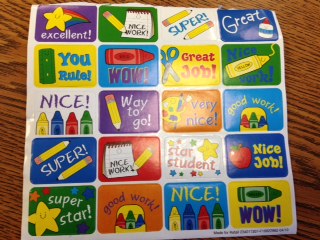
This rule also applies to reinforcing good behavior to our children. Compliments need to go farther than just “good job”. When I go to the School Box store and I see all of the stickers, I always dream of inventing one that leaves room to specify exactly what was “Well Done” or what “A+” means.

In short, we must be specific when we talk to our children. We need to give them well described directions. On the other side, we need to specifically reinforce their good efforts, even the small ones.

Good Job= Lottie I love how you stopped running when you saw your little sister today because you know you could have run into her and hurt her. Thank you.

Well Done= Lottie it is so great that you put your plate in the sink without me asking you do. That is a really good decision.

Using more detail in directions and compliments seems easy enough, but something else that we forget it to specifically praise children when they comply a little bit. I know how hard this is when dealing with extreme behaviors. As adults, we are so frustrated and obsessed with what they are doing wrong, we forget to dig and see what they are doing right. For example, when I have a student melting down, they may be telling me to “F-off”, and they may be throwing desks and supplies all around the room. Do they have my blood boiling? You bet they do. It takes all I have to positively reinforce the little things at this point, but this is the point where they need it the most.

Rewarding the Little Things= Timmy is in a full meltdown, cussing and turning the entire room over. Timmy picks up a chair over his head and acts as though he may throw it. Instead of throwing it, he puts it down (loudly of course). “Timmy, thank you so much for putting down the chair. That was a great decision. I am proud of you.”

image